Reducing Technical Debt: CodeScene Rollout Steps that Work
A Strategic Onboarding Framework for Engineering Teams seeking to prevent and reduce Technical Debt.
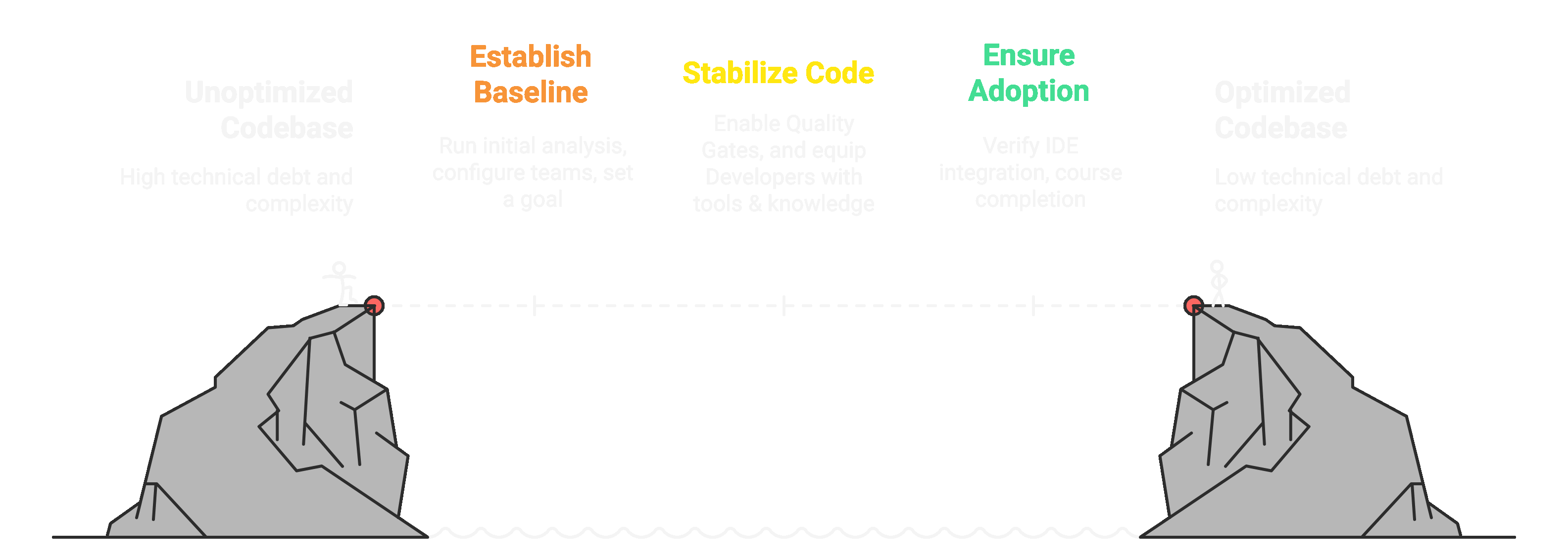
Week 1: Establish Baseline & Set Goals
Create Your First Project & Gain Situational Awareness
Create your first CodeScene project
Run an initial analysis
Download a Code Health Overview PDF report (details here)
Subscribe to the weekly Code Health Overview report (details here)
Optimise Your Project Setup Prior to Onboarding
Navigate to the project configuration page to exclude third party code (instructions here)
Configure teams, map aliases and mark ex-developers (instructions here)
Re-run the analysis for updated insights (instructions here)
Nominate Pilot Team(s) and Set a Goal
Nominate one or two teams best placed for achieving the objective of reducing technical debt fast
Filter the dashboard by the chosen team and record their current Hotspot Code Health and set a goal to improve this by 1.0 in the next 3 months. E.g. Move from 5.6 to 6.6.
Share this article internally to communicate the benefits
Onboard Developers & Stabilise the Codebase
Enable the Pull Request integration with the bare minimum profile to catch and prevent new technical debt being introduced. (see setup instructions)
Share this 3-Step Developer Onboarding guide with the team(s) for installing the MCP Server and IDE extension to prevent new technical debt leaving the terminal.
Week 2: Drive Adoption & Address Blockers
Adoption is the foundation for measurable improvement, address any blockers immediately
Verify 100% of nominated developers have installed the MCP Server, IDE extension and optionally, completed the CodeScene Academy courses
Review PR Statistics to check whether feedback is being followed or ignored (instructions here)
Ongoing: Bi-weekly Reviews for Staying On Track
Assess team KPIs against your 3-month goal in the Project Dashboard. Is the trend stable? Celebrate the win and jump to Hitting the Goal. Trending downwards? Revisit adoption steps are carried out.
Once more than 80% of code health issues are prevented, activate the Clean Code Collective PR Profile (see in “PR Statistics”)
Codebase Stablised: Hitting the Goal
You've completed the most important onboarding steps to prevent new technical debt, great job! Now it’s time to make a real impact.
To reach your Hotspot Code Health Goal, you'll need to go further by making high-impact refactorings.
Automatically refactor the low-hanging fruit: With CodeScene’s MCP Server combined with an AI tool like Claude or Github Co-pilot, refactorings which would have taken days can be done safely in a matter of minutes
Manually refactor the low-hanging fruit: Share this Guided Workflow for Paying Down Technical Debt with the nominated team(s) to help them quickly find the files and functions that once refactored will deliver the greatest return on investment.
Continue assessing team KPIs against your 3-month goal bi-weekly in the Project Dashboard. On track? Celebrate wins and begin onboarding additional teams. Off track? Revisit adoption steps are carried out.
Success Insight: Teams that follow this structured approach see measurable code health improvements within the first sprint cycle. Teams leveraging their preferred AI tooling with CodeScene’s MCP Server see measurable code health improvements faster.