Rolling Out CodeScene Alongside AI Adoption: An Enterprise Onboarding Guide
Who this is for
This guide is for engineering leaders at organisations with hundreds of developers who want to scale AI-assisted coding safely. In many of these organisations, AI tools are already available but only a minority of developers use them fully. The blocker is usually trust and change management, not tooling.
For technical instructions and considerations for deploying CodeScene, see How CodeScene Is Deployed: Architecture & Options for Enterprise Teams.
The idea in one sentence
AI speeds up delivery on healthy code and amplifies risk on unhealthy code. So show your teams where AI is safe today, guardrail every AI change automatically, and use Code Health to prove that adoption makes delivery faster, not riskier.
Phase 0: Agree the "why"
Write down the problem in your own words. For example: "Only 15% of our developers use AI fully. We want 60% within two quarters without increasing defects."
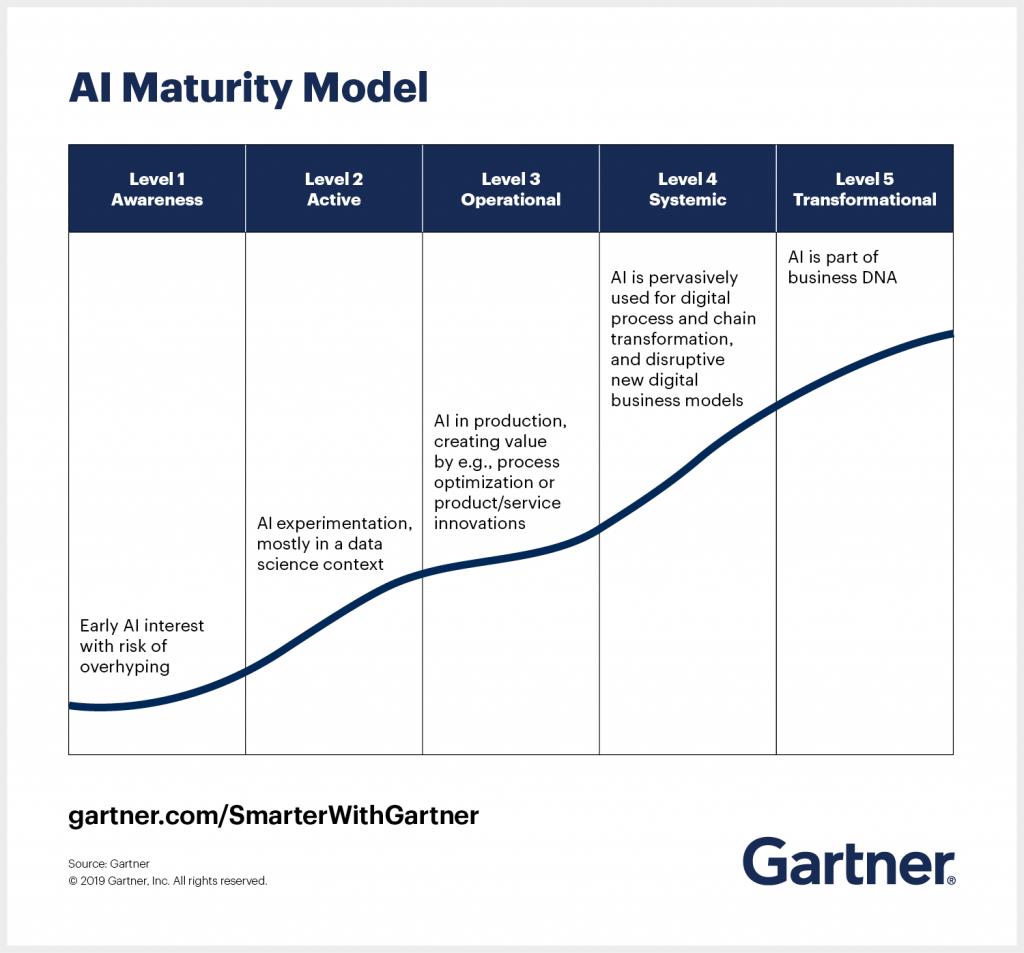
Place yourself on the AI maturity curve: L1 Awareness, L2 Active (pilots, ad hoc use), L3 Operational (AI in the daily workflow), L4 Systemic, L5 Transformational. Your stage decides what to roll out first.
Name an executive sponsor, a rollout owner, and one or two pilot teams. Ideally pick one enthusiastic team and one sceptical team.
Choose two or three success metrics. We suggest AI adoption rate (for example, CodeHealth MCP Server users as a share of active developers), Average and Hotspot Code Health, and unplanned work %.
Phase 1: AI readiness assessment (weeks 1–2)
Create CodeScene projects for your main systems. At scale, automate project creation (see Automating Project Creation for Frictionless Team Onboarding).
Configure teams and mark former developers so that team-level and knowledge insights are accurate.
Record your baselines: Average Code Health, Hotspot Code Health, and Delivery metrics if your Jira or Azure DevOps PM integration is enabled.
Map AI readiness. Under Average Code Health, select Explore codebase. Green, healthy code (Code Health 9.5+) is AI-ready and low risk. Code below that and especially hotspots below 7 is where AI-generated changes carry the most defect risk.
Output: A one-page AI readiness summary that shows where teams can lean on AI now, where to go carefully, and what to uplift first.
Phase 2: Pilot with guardrails (weeks 2–6)
Onboard developers with the 3-Step Developer Onboarding Guide:
CodeHealth MCP Server. It gives AI assistants Code Health context so they can self-correct. Copy the guidance into each repository or the AI tooling won't call the server.
CodeScene CLI as a local, deterministic quality gate. Use Git pre-commit hooks, plus AI agent hooks such as a Claude Code Stop hook running cs delta --git-hook --staged.
IDE extension for semi-manual coding, with real-time feedback and the Code Health Monitor.
Enable the Pull Request integration with the bare minimum profile as the final safety net before merge.
Keep test coverage strong. Don't let AI generate tests from the code under test.
Run two or three short (one-hour) enablement sessions for the pilot teams, focused on real tasks in AI-ready areas.
Track adoption every week (see How Do I See Who Is Using the MCP Server?).
Phase 3: Scale (months 2–4)
Roll out team by team and use the pilot teams as internal champions. Peer evidence works better than top-down mandates.
Bring CodeScene into the rituals you already have: Code Health trends in stand-ups or sprint reviews, and a monthly review of PR Statistics.
Raise the bar. Once more than 80% of Code Health issues are prevented at PR time (see PR Statistics), switch to the stricter Clean Code Collective PR profile.
Uplift code that isn't AI-ready yet. Use the MCP Server and CLI to refactor hotspots safely.
Phase 4: Prove the impact (ongoing)
Review progress from baseline to goal every two weeks at first, then monthly.
Report to leadership in business terms: AI adoption up, Code Health stable or improving, and unplanned work and defects down in the areas that matter.
Typical pitfalls
Rolling out AI tools without guardrails. Early velocity gains are often wiped out by rising complexity.
Setting Code Health targets top-down. Let engineering managers own their targets.
Trying to fix the whole codebase first. Prioritise hotspots because the code you change most is where health matters most.
Measuring tool installs instead of outcomes.
Related articles
Was this helpful?
Still need help? Ask the team